5 Cape Verde Football Team Mistakes Bettors Make
Cape Verde national football team analysis starts with one fact: this is a competitive West African side, not an automatic underdog. Representing the Republic of Cabo Verde, the Blue Sharks compete un...

5 Cape Verde Football Team Mistakes Bettors Make
Cape Verde national football team analysis starts with one fact: this is a competitive West African side, not an automatic underdog. Representing the Republic of Cabo Verde, the Blue Sharks compete under the Federação Cabo-Verdiana de Futebol and are affiliated with CAF and FIFA. Cape Verde reached the Africa Cup of Nations quarter-finals in 2023, a useful marker of its growing level, while its squad regularly includes players developed in Portugal, France, the Netherlands, and other European leagues. Recent ESPN-listed results also show the team drawing 2-2 with Uruguay, drawing 0-0 with Spain, and beating Serbia 3-0 in the supplied schedule snapshot. That mix makes simple win-loss betting dangerous. The practical takeaway is straightforward: price Cape Verde through opponent quality, venue, confirmed lineups, and tournament motivation before touching the market.

Photo by damien Saillet on Pexels
Want a cleaner way to follow tournament numbers and match context? Check the latest coverage from World Cup Hub before making a call.
The Quick Comparison
| Betting mistake | What the mistake ignores | Better adjustment |
|---|---|---|
| Treating Cape Verde as a weak outsider | Recent tournament progress and European-based players | Compare opponent strength and starting XI |
| Using old reputation | Squad cycles change quickly | Track current form and injuries |
| Ignoring venue | Travel, heat, pitch, and altitude can shift performance | Separate home, neutral, and away data |
| Overrating one result | A single draw or win has limited predictive value | Use a multi-match sample |
| Chasing short odds | Price may already include the popular narrative | Calculate implied probability and value |
Cape Verde is exactly the sort of team that creates messy pricing. The public often sees the country name first, then the opponent’s reputation, and only after that checks the actual matchup. That order is backwards. For a rational bettor, the key number is not whether Cape Verde can surprise a larger football nation; it is whether the available price is higher than the probability implied by the evidence. For example, odds of 2.00 imply a break-even probability of 50% before margin, while 3.50 implies roughly 28.6%. That calculation does not predict a result by itself, but it stops the classic mistake of betting a good story at a bad price. The [Internal Link: international football betting guide] can help with that basic probability workflow.
Round 1: Why Do Bettors Misread Cape Verde’s Team Level?
Cape Verde is often misread because its FIFA profile and population create an “easy underdog” narrative, even though its football structure and player pool are more competitive than casual markets assume. The Blue Sharks’ quarter-final run at AFCON 2023 showed that the team could manage knockout pressure, while European-based players add tactical and physical experience. However, that does not mean Cape Verde should automatically be backed against every highly ranked opponent.
The useful distinction is between reputation and repeatable performance. Cape Verde has produced notable results, but tournament football is still a small sample. Its qualification route, opponent rotation, red cards, set pieces, and late-game game state can distort the numbers. A 3-0 victory over Serbia, for instance, is informative only when you know the lineup, match purpose, substitutions, and shot profile behind it. Likewise, a 0-0 draw with Spain says something about defensive resistance, but not necessarily about attacking output against a compact African opponent. As ESPN’s Cape Verde team page illustrates, schedules can mix World Cup fixtures, friendlies, and penalty-decided matches; those categories should not be thrown into one spreadsheet without labels.
Mistake 1: Betting the badge instead of the matchup
The first common error is treating Cape Verde’s improvement as a permanent rating upgrade. Improvement is real, but the opponent still matters more than the headline. Against a team that presses aggressively, Cape Verde may struggle to progress through midfield; against a side leaving space behind its full-backs, Cape Verde’s transition threat becomes much more relevant. The same team can therefore look excellent in one tactical environment and ordinary in another, which is annoying but also where the edge lives.
A practical pre-match checklist should include:
- Compare expected starting lineups, not just squad lists.
- Separate competitive fixtures from friendlies.
- Check whether the opponent dominates possession or attacks in transition.
- Review set-piece strengths at both ends.
- Remove penalty-shootout outcomes from ordinary win-rate calculations.
That last point is easy to miss. A match recorded as a draw after 90 or 120 minutes may be shown alongside a penalty win, but the betting settlement rules differ by market. In the supplied ESPN snapshot, Cape Verde beat Finland 4-2 on penalties after a 1-1 result. Counting that as a standard 2-1 win would quietly inflate the team’s open-play record. Small accounting error, big spreadsheet nonsense.
Round 2: How Important Are Venue, Travel, and Match Conditions?
Venue matters because Cape Verde’s performance cannot be evaluated cleanly without separating home, away, and neutral-site matches. Travel between islands, continental Africa, and Europe can affect preparation, while heat, humidity, wind, pitch quality, and kickoff time influence tempo. These variables do not guarantee a result, but they can change the expected value of totals, first-half markets, and late-game performance.
The Republic of Cabo Verde is an island country in the Atlantic Ocean, and national-team logistics are not identical to those of a large continental federation with deep domestic infrastructure. Matches may be staged in Praia, elsewhere in the archipelago, or at neutral venues depending on competition and facility requirements. The FIFA member association profile for Cabo Verde is a useful starting point for federation and competition context, but bettors still need the fixture location and local weather. If a market opens before those details are confirmed, the first odds may be less efficient than the closing line.

Photo by Hany Nafady on Pexels
Mistake 2: Assuming away form travels perfectly
Cape Verde’s away results should not be copied directly into a home projection, and home results should not be treated as portable either. A team that defends deep and breaks quickly may benefit from an opponent forced to attack on its own turf, while the same approach can become less effective when Cape Verde must control possession. This is why venue-adjusted samples are more useful than a single overall record.
Here is a simple way to organize the information:
- Home matches: examine territorial control, crowd effect, and set-piece volume.
- Away matches: examine travel distance, first-half concessions, and transition chances.
- Neutral matches: treat them separately rather than calling them home or away.
- Hot or windy conditions: be cautious with aggressive over-goals assumptions.
- Short-rest fixtures: reduce confidence in high-intensity pressing forecasts.
One underused angle is the opening 15 minutes. If Cape Verde tends to begin cautiously in difficult away fixtures, first-half unders may deserve more attention than full-match unders, provided the opponent is not an early-pressure specialist. This is not a universal rule; it is a market segmentation idea. The contrarian point is that weather may matter less to the final result than to the first-half pace, so betting the full-time winner solely because of heat is usually overreach. For a broader method, see the [Internal Link: first-half football markets explained] resource.
Want the tactical context next to the raw odds? Use the match previews rather than relying on a country-name shortcut.
Round 3: What Should 2026 Cape Verde Team Analysis Focus On?
For 2026 Cape Verde national football team analysis, focus on squad availability, qualification stakes, tactical roles, and market movement rather than past headlines. The team’s competitive ceiling depends heavily on whether its key European-based players are available, how midfield roles are balanced, and whether the opponent allows transition attacks. FIFA World Cup qualification fixtures should also be weighted more heavily than friendlies because motivation, substitutions, and game management are usually different.
Cape Verde’s identity has often been associated with technical players, direct running, and organized defensive phases, but tactical labels can become lazy. The real question is where the team creates its chances. Are they coming from wide deliveries, turnovers, corners, or controlled combinations? Are shots arriving from dangerous central areas or speculative distance? A team can post a respectable goal count while generating low-quality attempts, especially when it scores early and spends the rest of the match defending. That is why World Football Elo Ratings can be paired with event data, lineup news, and opponent-adjusted results instead of used as a standalone oracle.
Mistake 3: Confusing one famous result with a stable trend
The third error is narrative overfitting. Cape Verde’s 2-2 draw with Uruguay and 0-0 draw with Spain, as shown in the supplied ESPN schedule, are attention-grabbing outcomes. They are useful evidence of resilience, but they do not prove that Cape Verde will consistently hold elite opponents scoreless or trade chances with them. A bettor needs to ask whether the result came from sustained defensive control, goalkeeper performance, poor finishing, or a low-event game.
A more disciplined model uses at least three layers:
- Baseline rating: FIFA ranking, Elo strength, and recent opponent quality.
- Matchup adjustment: pressing, width, set pieces, transitions, and defensive line.
- Availability adjustment: goalkeeper, central defenders, striker, and midfield replacements.
The most useful information gain is often negative information: what not to count. Penalty shootouts should not be treated as attacking evidence; friendly substitutions should not be compared directly with qualification substitutions; and a clean sheet against Spain should not be assumed to transfer to a match where Cape Verde is expected to dominate the ball. As the Confederation of African Football competition framework shows, tournament context changes the value of risk, so a team protecting a point may produce a very different match from a team that must win.
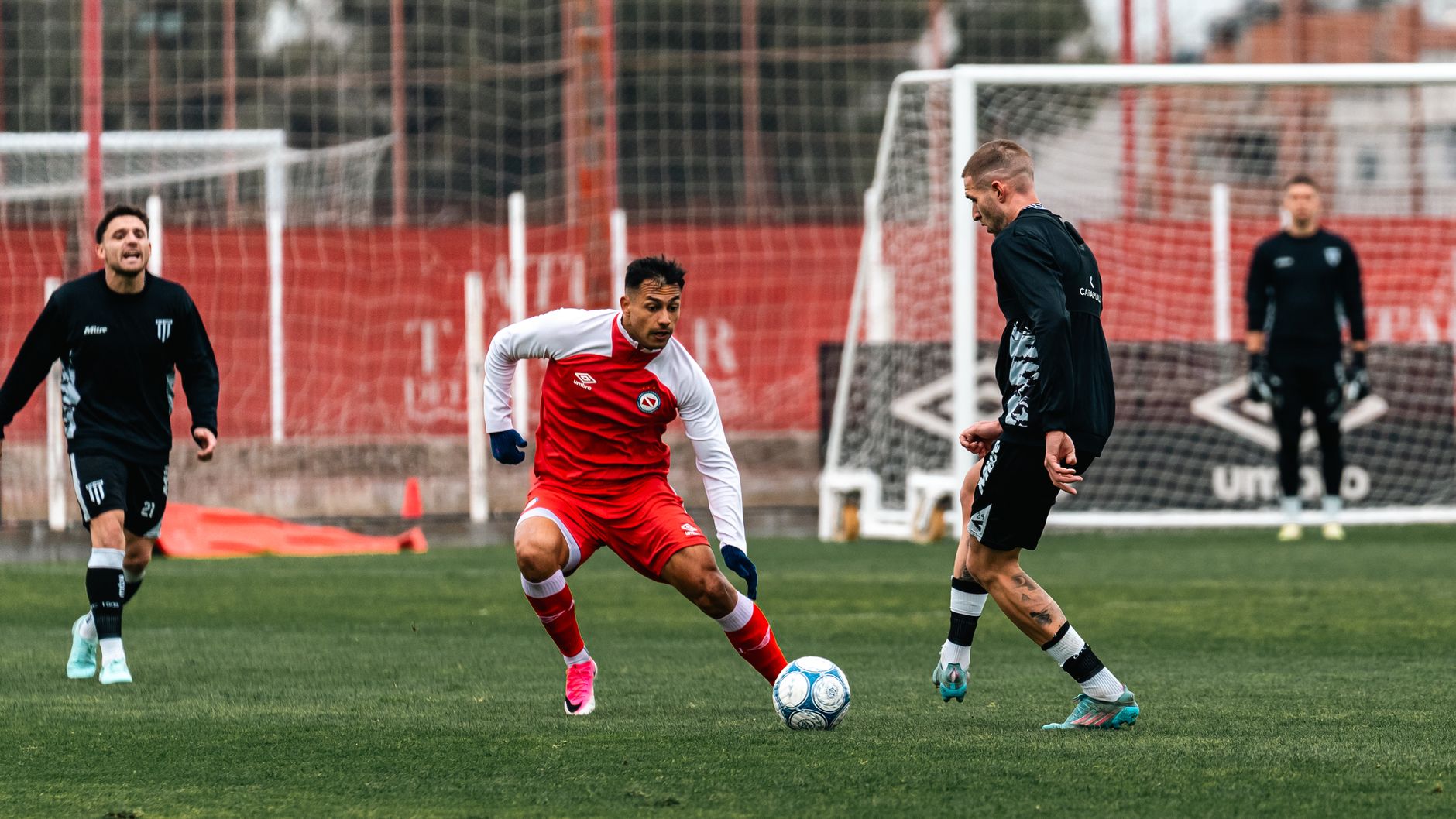
Photo by Franco Monsalvo on Pexels
Mistake 4: Ignoring squad depth and replacement quality
Cape Verde has a smaller player pool than major football nations, which makes availability especially important. A missing first-choice striker may not only remove goals; it can change pressing triggers, hold-up play, and the team’s ability to retain possession. Similarly, replacing a central defender can affect the full-back’s positioning and the midfield’s willingness to step forward. Those secondary effects are easy to miss if you only read the injury list.
Before placing a bet, check:
- Whether the announced squad includes the normal starting goalkeeper.
- Which defenders have played together recently.
- Whether the main striker is fit enough for 60, 75, or 90 minutes.
- How many changes the coach made in the previous fixture.
- Whether dual-national players have completed eligibility and call-up requirements.
This is also where live betting can become expensive. If Cape Verde starts without its usual outlet and spends the first 20 minutes pinned back, the market may offer a tempting price after a scoreless opening. But a cheaper price is not automatically value if the tactical reason for the slow start is still present. The [Internal Link: football lineup and injury checklist] is worth keeping beside the odds screen, not opening after the bet has already gone wrong.
The Final Score & Who Should Pick What
Cape Verde is a team for matchup bettors, not badge bettors. The Blue Sharks have enough tournament experience, European-based talent, and defensive discipline to punish lazy assumptions, yet their results remain sensitive to venue, opponent style, player availability, and game state. The best approach is not to declare Cape Verde “good” or “bad”; it is to estimate a fair probability, compare it with the market, and pass when the price is thin.
Who should consider Cape Verde markets?
- Value-focused bettors: look for inflated underdog prices after a poor headline result.
- Totals bettors: study tempo, weather, and whether both teams need a win.
- Live bettors: wait for tactical confirmation, but avoid chasing emotional swings.
- World Cup followers: prioritize confirmed lineups and qualification incentives.
- Casual fans: use double-chance or no-bet structures rather than forcing a winner.
A final operational tip: record the closing price after every wager. If you backed Cape Verde at 3.80 and the market closed at 3.30, that is useful process evidence even if the match lost. If you repeatedly take 2.20 when the closing line reaches 2.60, your results may be running hot. Track stake, odds, implied probability, closing odds, result, and net position. Football is noisy; your records should not be.
For current 2026 World Cup angles, compare the team’s latest news with the market rather than betting from memory.
Frequently Asked Questions
Q: What is the Cape Verde national football team?
A: The Cape Verde national football team represents the Republic of Cabo Verde in international men’s football. It is governed by the Federação Cabo-Verdiana de Futebol and competes through the Confederation of African Football, commonly called CAF. The team is nicknamed the Blue Sharks and has developed a reputation as a competitive African side with many players connected to Portugal and other European football systems. Cape Verde’s quarter-final appearance at the 2023 Africa Cup of Nations was a major modern milestone.
Q: How did Cape Verde perform at AFCON 2023?
A: Cape Verde reached the quarter-finals of the 2023 Africa Cup of Nations. The tournament was hosted by Côte d’Ivoire in 2024 after its original 2023 scheduling, and Cape Verde advanced from the group stage before its knockout run ended against South Africa. That performance matters because it demonstrated tournament consistency, but bettors should not treat one AFCON campaign as a permanent guarantee of future results.
Q: Is Cape Verde good enough to beat major football nations?
A: Cape Verde can beat or draw with stronger-ranked nations, but the outcome depends heavily on matchup, venue, and lineup quality. The supplied ESPN schedule includes a 2-2 draw with Uruguay, a 0-0 draw with Spain, and a 3-0 win over Serbia, showing genuine upset potential. Those results are evidence of a competitive ceiling, not proof that Cape Verde should always be backed against elite opposition.
Q: How should bettors analyze a Cape Verde match?
A: Start with the confirmed lineup, competition type, venue, opponent style, and available odds. Separate World Cup qualifiers and AFCON fixtures from friendlies, then compare a fair probability with the implied probability in the market. Also remove penalty-shootout results from ordinary win calculations, because a shootout victory does not represent a 90-minute or 120-minute attacking win.
Q: What is the difference between Cape Verde’s home and away form?
A: Home and away form describe different tactical and logistical environments, so they should not be combined without adjustment. Praia-based fixtures may involve different crowd, travel, pitch, and climate conditions from matches in Europe or on mainland Africa. For practical analysis, group home, away, and neutral fixtures separately, then examine first-half goals, possession pressure, set pieces, and late-game fatigue within each group.
Q: Why can Cape Verde’s betting odds move quickly?
A: Cape Verde’s odds can move quickly because confirmed lineups and player availability have an outsized effect on a relatively small squad. A missing striker, goalkeeper, or central defender can change both the team’s expected goals and its defensive shape. Prices may also react to venue confirmation, weather, late injury news, and public money following a recent result, so comparing opening and closing odds is essential.
Q: Is betting on Cape Verde free?
A: Researching Cape Verde fixtures, results, and statistics can be free, but placing a bet requires money through a legally available bookmaker. Costs may include the bookmaker’s margin, deposit fees, withdrawal charges, or currency conversion, depending on the provider and jurisdiction. Set a fixed stake, confirm local gambling rules, and never treat a free preview or promotional offer as a guarantee of profit.
Interested in more 2026 World Cup team analysis and responsible market research? Visit World Cup Hub for the latest match context.
Report complete.
World Cup Hub · Analytical Archive