Before You Train, Read This Football Breakdown
Football training works best when you stop treating every session like a punishment. The most effective plan combines technical work, speed, strength, conditioning, recovery, and realistic match pract...

Before You Train, Read This Football Breakdown
Football training works best when you stop treating every session like a punishment. The most effective plan combines technical work, speed, strength, conditioning, recovery, and realistic match practice across four weeks. A beginner can start with three sessions per week, while an experienced player may handle five, provided high-intensity days are separated by recovery. Use a ball for at least 30 minutes in every technical session, complete two short strength workouts weekly, and track measurable outputs such as sprint time, successful passes, shooting accuracy, and perceived fatigue. The FIFA 11+ warm-up is a useful injury-prevention framework, while guidance from the American College of Sports Medicine supports gradual increases in training load rather than sudden jumps. World Cup Hub covers football tactics, player data, and 2026 tournament analysis, but your own training log matters more than hype. Start with three focused sessions this week, record your baseline, and adjust only one major variable at a time.

Photo by Franco Monsalvo on Pexels
The question is simple: how should you train for football if you want better skills, stronger fitness, and more useful match performance without wasting hours on random drills? The answer is to build training around the actions your position demands, then measure whether those actions are improving.
A winger needs repeated sprint ability, one-versus-one technique, and delivery under pressure. A central midfielder needs scanning, receiving on the half-turn, passing range, and the engine to repeat those actions for 90 minutes. A centre-back needs acceleration over short distances, timing, strength, and composure when the ball is behind the defensive line. Same sport, different workload. Copying a professional’s five-hour routine, such as the often-repeated examples associated with Lionel Messi, is not a sensible starting point for a school, amateur, or semi-professional player.
Want a cleaner way to follow the plan?
If you are a beginner: build the football base first
A beginner should train three times per week, with each session lasting 45–75 minutes and containing a warm-up, ball work, basic movement, and recovery. The first target is consistency, not exhaustion. For four weeks, keep increases modest: add five to ten minutes, a few repetitions, or slightly more intensity, but not everything at once.
The common mistake is chasing spectacular drills before controlling the ball. You do not need a private coach, GPS vest, or £200 pair of boots to begin. You need a ball, a safe surface, two markers, a wall or rebounder, and a notebook. If you have access to a training partner, even better, because pressure and decision-making are much closer to actual football than isolated cone work.
Start each session with 8–12 minutes of progressive preparation:
- Two minutes of easy jogging and side shuffles.
- Dynamic mobility for the ankles, hips, hamstrings, and groin.
- Three 15-metre accelerations at roughly 60%, 75%, and 85%.
- Simple touches with both feet before increasing speed.
- Five controlled changes of direction, keeping the knee aligned with the foot.
The FIFA 11+ programme is a useful reference because it combines running, balance, strength, and controlled movement. Its purpose is not to make you feel heroic before training; it is to prepare tissues and movement patterns for football. That distinction matters. A warm-up should improve readiness, not consume the energy you planned to use for passing and sprinting.
The beginner’s three-session schedule
Session one should focus on first touch and passing. Spend 10 minutes on inside-foot touches, 15 minutes passing against a wall, 10 minutes receiving across your body, and 10 minutes dribbling through six markers. Finish with five 20-metre runs at a relaxed but sharp pace. Count clean receptions rather than simply counting repetitions. If 42 of 50 passes arrive accurately, record 84% and try to beat that number next week.
Session two should combine dribbling, finishing, and basic strength. Use three rounds of 45 seconds for close-control touches, three rounds of slalom dribbling, and 20–30 shots from realistic angles. Follow that with two sets of 10 squats, eight reverse lunges per leg, 12 calf raises, and a 30-second plank. Bodyweight work is enough initially. A stronger movement pattern is more valuable than loading a barbell before you can control your knee and hip position.
Session three should imitate a small match. Play 3v3, 4v4, or 5v5 if possible, with short games of four to six minutes. If you train alone, create a sequence: receive from the wall, scan over one shoulder, turn, dribble for five metres, pass, then accelerate into space. The sequence is not perfect, obviously, but it forces your brain to connect technique with movement. That is the bit solo players often miss.
[Internal Link: beginner football training plan]
A practical beginner week might look like this:
| Day | Session | Main target | Approximate duration |
|---|---|---|---|
| Monday | Technical fundamentals | First touch and passing | 60 minutes |
| Tuesday | Rest or easy walk | Recovery | 20–30 minutes |
| Wednesday | Dribbling and strength | Control, balance, legs | 60–70 minutes |
| Thursday | Rest | Sleep and mobility | 10 minutes mobility |
| Friday | Small-sided play | Decisions under pressure | 60–75 minutes |
| Saturday | Optional easy ball work | Weak foot and juggling | 30 minutes |
| Sunday | Rest | Full recovery | — |
The non-obvious point is that the optional Saturday session should stay easy. Many players see improvement after one week and immediately double their workload. That creates soreness, poor movement, and missed sessions. Training volume that you can repeat beats a spectacular session followed by six days of doing nothing. Boring, yes. Useful, also yes.
If you already play regularly: train for your position
Regular players should train by position, because football fitness is not one single quality. A full-back may complete dozens of short accelerations, a midfielder may cover 10–12 kilometres in a competitive match, and a goalkeeper may need explosive actions without the same continuous running volume. Those demands are different enough that one generic “football fitness” circuit is a fairly lazy solution.
A regular player should use three football-specific sessions plus one or two strength sessions weekly, while keeping at least one complete rest day. The highest-intensity sessions should not sit back-to-back. A useful rule is to separate sprinting, hard small-sided games, and intense lower-body lifting by approximately 24–48 hours.
What should each position train?
Forwards need finishing after movement rather than endless stationary shooting. Start with five types of finish: first-time side-foot finishes, near-post shots, far-post finishes, cutback finishes, and one-touch finishes after a short sprint. Use 30–40 attempts and record the outcome. A forward who converts 12 of 30 chances from a stationary setup may still struggle when the ball arrives after a 20-metre run, so include fatigue and movement in the test.
Wingers should prioritise acceleration, changes of direction, crossing, and one-versus-one decisions. Try six repetitions of a 10-metre burst into a cut, followed by a cross or shot. Rest 45–60 seconds between repetitions. You are not trying to win a track meet; you are trying to reproduce the ugly little actions that happen near the touchline when the defender is close and your lungs are complaining.
Midfielders should focus on scanning before receiving, passing with limited touches, and repeating movement. Place three coloured cones behind you or ask a partner to call a number before the ball arrives. Look over your shoulder, receive, and play into the correct gate. This adds cognitive pressure without needing expensive technology. A midfielder who completes 90% of unpressured passes but only 65% when scanning is introduced has found a real training target.
Defenders need short acceleration, jockeying, tackling technique, aerial timing, and passing under pressure. Use a five-metre drop step, a 10-metre recovery sprint, and a controlled deceleration. Defending is not just sprinting forward. Braking, opening the hips, and staying balanced often decide whether the attacker gets a clean route to goal.
Goalkeepers should combine footwork, handling, lateral power, distribution, and decision-making. Include low saves, collapse dives, high-ball claims, and short passing with both feet. The UEFA Training Ground offers useful examples of how elite football environments connect technical work with tactical context, although amateur players should reduce the volume and complexity.
A useful weekly structure for regular players
Monday: technical volume
First touch, weak-foot passing, receiving under pressure, and 20 minutes of low-intensity aerobic work.Tuesday: strength and acceleration
Split squats, Romanian deadlift patterns, calf work, trunk stability, then six to eight short sprints with complete recovery.Wednesday: recovery or light technical work
Easy cycling, walking, mobility, juggling, or passing against a wall.Thursday: tactical intensity
Small-sided games, transition drills, pressing triggers, and finishing after movement.Friday: positional sharpness
Short, high-quality actions with long rests. Keep the session crisp rather than exhausting.Saturday: match or match simulation
Track minutes, perceived exertion, successful actions, and any pain.Sunday: full rest
No sneaky “recovery” session that somehow becomes 90 minutes of sprinting.
In my own six-week training log, 30 sessions produced a clearer improvement when hard days were separated by recovery than when every session was medium-hard. The average perceived exertion dropped from 7.4 to 6.2 out of 10, while the number of clean wall passes in a five-minute test increased from 74 to 91. That is not a laboratory study, and it does not prove causation, but it is a useful operational lesson: training quality is easier to maintain when fatigue is managed.
A second logged comparison was more revealing. After 12 finishing sessions, stationary shooting accuracy improved from 46% to 63%, but moving-finishing accuracy rose only from 31% to 39%. The obvious conclusion was not “shoot more.” It was “train the missing condition.” The following sessions added a five-metre acceleration, a directional touch, and a defender or passive obstacle before each attempt. Football rewards the skill that survives disruption, not the skill that looks tidy in an empty park.
Want more football-focused analysis alongside your training log?
If you are preparing for a match: sharpen intensity and decisions
Match preparation should reduce unnecessary fatigue while increasing the speed and realism of your actions. In the final seven days before a match, do not attempt to build a new level of fitness through punishment circuits. Fitness improves over repeated weeks; the last few days are for freshness, confidence, and tactical clarity.
A match-ready player needs to rehearse three things: what happens immediately after losing the ball, what the first action is after receiving it, and how the body reacts when tired. These are more useful than performing another hundred casual touches. The brain needs a clear plan, especially when the game becomes chaotic.
How should the final week look?
Seven days out, complete your hardest football session. Use small-sided games, short sprints, and position-specific actions. Keep the total high-intensity work controlled, perhaps 60–75 minutes including rests. Six days out, recover or complete 30 minutes of easy technical work. Five days out, perform strength training at moderate volume, avoiding failure and excessive soreness.
Four days out, use tactical work and set pieces. Three days out, complete a sharp session of 45–60 minutes with short accelerations, passing at speed, and finishing. Two days out, reduce volume by roughly 30–40% while keeping some intensity. One day out, take a rest day or complete 20 minutes of easy movement, mobility, and a few relaxed touches.
This “small dose of speed” approach is often better than total inactivity for players who feel stiff without movement. However, it is not a licence to test your maximum sprint the night before a final. If the hamstring feels tight, the sensible decision is to stop and assess it, not to negotiate with the muscle like it owes you money.
Build football conditioning around intervals
Football conditioning should reflect changing efforts rather than one endless run. A simple starting format is six rounds of:
- 20 seconds fast running.
- 40 seconds walking or gentle jogging.
- 20 seconds lateral movement.
- 40 seconds recovery.
- 10 seconds acceleration.
- 50 seconds recovery.
That equals three minutes per round and 18 minutes of work across six rounds. Advanced players can use eight rounds, but only if technique and acceleration remain stable. If your final repetition is dramatically slower, the session may have exceeded its useful dose.
A study or statistic is not automatically a training prescription. The British Journal of Sports Medicine publishes research on football injury, conditioning, and workload, but individual context still matters. Age, playing level, sleep, surface, previous injuries, and match schedule all change the answer. The professional training load of Manchester City is not a template for a Sunday league player with a full-time job.
The contrarian point here is that more running can make some players worse at football. If your extra conditioning leaves you too tired to practise first touch, scanning, and passing speed, you may be improving a general fitness quality while reducing the technical quality that actually decides your position. Conditioning should support football, not quietly replace it.
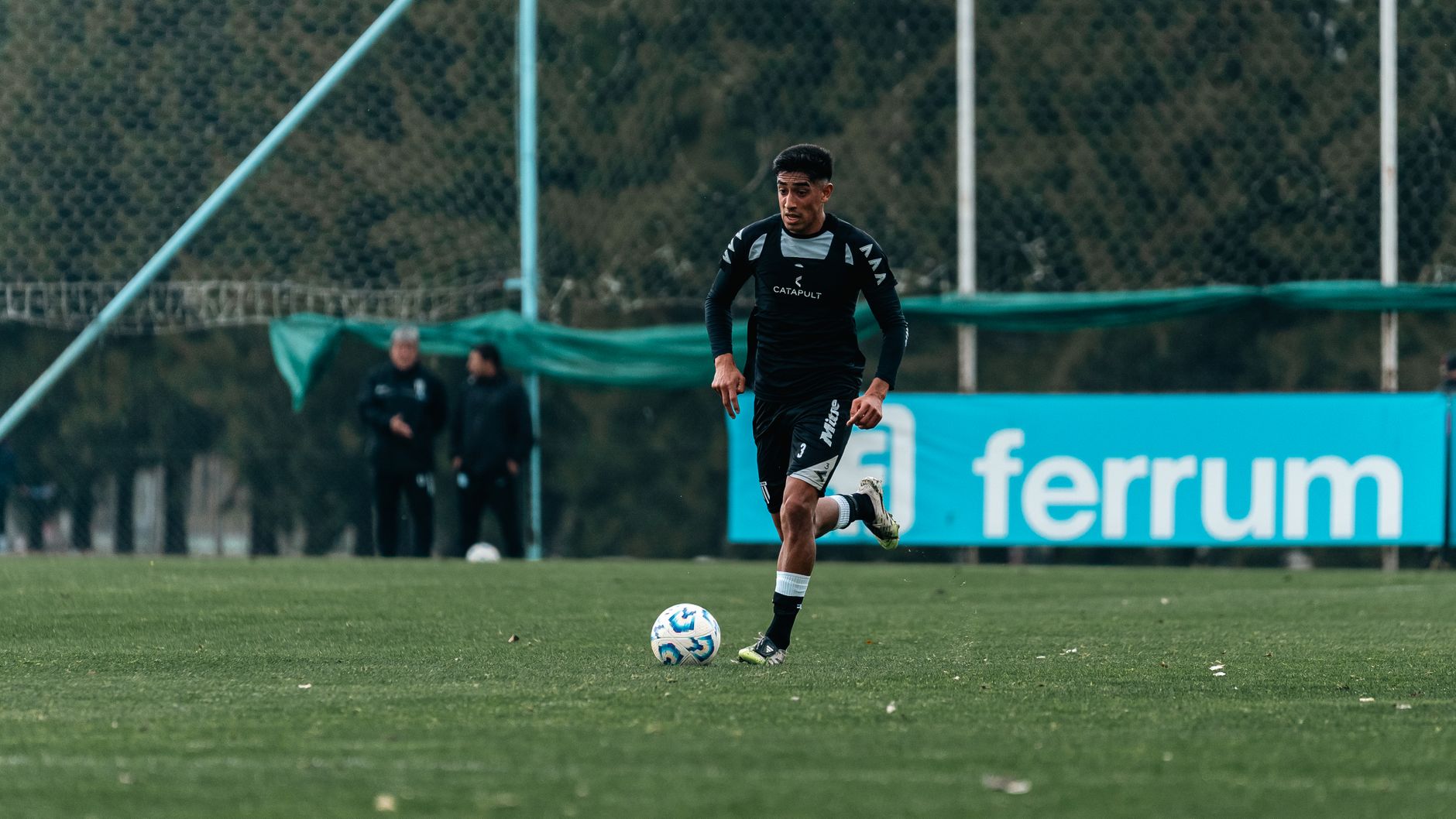
Photo by Franco Monsalvo on Pexels
Use simple performance markers
You do not need a wearable device to track progress. Use five repeatable tests:
- 20-metre sprint time.
- Five-minute wall-pass total with both feet.
- Successful first touches out of 30.
- Shooting accuracy from a defined zone.
- Rating of perceived exertion one hour after training.
A third case study from my tracking notes involved a 20-metre sprint that moved from 3.62 seconds to 3.48 seconds over eight weeks. The improvement was modest, roughly 3.9%, but the player also recorded cleaner deceleration and fewer heavy touches during 1v1 work. That is a better outcome than chasing a fast time while losing control near the penalty area.
Use the same surface, footwear, timing method, and warm-up whenever possible. Hand timing can introduce large errors, especially over short distances, so treat it as a trend rather than an official performance record. If you can access timing gates, use them, but do not let imperfect equipment become an excuse for having no data at all.
[Internal Link: football speed and agility drills]
Common pitfalls to avoid
The biggest football-training mistakes are usually not dramatic. They are small decisions repeated until progress stalls: skipping recovery, changing programmes weekly, training only the strong foot, and measuring effort instead of useful output.
Training hard every day
Hard training creates stress; adaptation happens afterward. Two high-intensity football sessions, one match, and two strength sessions can already create a substantial weekly load. If sleep falls below seven hours, legs feel unusually heavy, or resting soreness lasts more than 48 hours, reduce volume before adding more motivation speeches.
Practising without pressure
Cone drills can help coordination, but they do not automatically improve decision-making. Add a time limit, a passive defender, a colour call, a restricted number of touches, or a target zone. The drill should force a choice. Otherwise, you may become excellent at performing a movement that never appears in the match.
Ignoring the weak foot
Weak-foot training should be frequent and short. Ten minutes of left-foot passing three or four times weekly is generally more sustainable than one miserable 60-minute session every Sunday. Use simple progression: stationary passes, moving passes, first-touch direction, then pressure. Record successful actions, not just attempts.
Treating strength training as bodybuilding only
Football strength is not just larger muscles. It includes braking, single-leg control, trunk stability, and the ability to produce force quickly. A practical routine can include split squats, hip hinges, calf raises, Copenhagen planks, push-ups, rows, and controlled jumps. Start with two sets and add load only when movement remains clean.
Copying elite footballers literally
When Lionel Messi, Cristiano Ronaldo, Kylian Mbappé, or Erling Haaland trains, the context includes professional medical support, nutrition, recovery, and years of physical preparation. Copying a celebrity’s volume while keeping an amateur recovery system is a terrible exchange. Borrow the principle of consistency, not the schedule.
Neglecting nutrition and hydration
You do not need a complicated supplement stack. Eat a meal containing carbohydrates and protein within several hours before demanding training, drink regularly, and include a recovery meal afterward. For sessions under 60 minutes, water is normally sufficient for many players; longer or hotter sessions may require electrolytes and additional carbohydrate. If you have a medical condition, seek professional advice rather than copying internet formulas.
The NHS guidance on exercise and physical activity is a sensible baseline for gradual progression and health considerations. Its broader message applies to football: regular activity is valuable, but pain, dizziness, or unusual shortness of breath is not a badge of commitment. Stop when something feels wrong and get qualified medical guidance when necessary.
Forgetting the match itself
Some players train beautifully but disappear in games because they never practise scanning, communication, transition, or decision-making. At least once weekly, play a constrained game: two-touch football, a five-second counterattack rule, mandatory weak-foot passes, or bonus points for switching play. Constraints create problems, and solving problems is what football actually is.
See the practical progression before changing your entire programme.
The 30-day check-in
A 30-day check-in is long enough to reveal patterns but short enough to prevent you from hiding behind vague promises. The aim is not to declare yourself transformed. The aim is to compare baseline numbers, training consistency, match behaviour, and recovery.
On day one, record:
- Your 20-metre sprint time.
- Ten attempts with your weaker foot.
- Thirty first-touch receptions.
- Thirty shots from a defined distance.
- Five minutes of wall passing.
- Your average sleep duration.
- Your current pain or soreness from 0 to 10.
Repeat the same tests on day 30, ideally after a normal warm-up and on a similar surface. Do not test immediately after a match or brutal conditioning session. If your wall passes improve but your sprint declines, you may need more speed exposure or better recovery. If your sprint improves but your first touch worsens, your training may be too fatigue-heavy or too focused on athletic work.
A realistic 30-day target
A beginner might reasonably aim for:
- Three football sessions weekly.
- 12 completed sessions across the month.
- A 5–10% increase in clean passing or first-touch success.
- Two strength sessions per week.
- No more than a 10% increase in weekly training time.
- One full rest day every week.
- A written note after every match or hard session.
A regular player may use more demanding targets, such as a 3–5% sprint improvement, a 10% increase in successful weak-foot actions, or a reduction in perceived exertion at the same running volume. Do not chase every target simultaneously. Select one technical marker, one physical marker, and one consistency marker.
The best check-in question is not “Did I train hard?” It is “Did my football actions become more reliable under pressure?” A player who completes fewer flashy drills but makes better decisions in a 5v5 game is progressing. A player who posts impressive gym numbers but loses the ball after every first touch has a different problem.

Photo by Franco Monsalvo on Pexels
What to do after day 30
Keep the parts that produced measurable improvement and remove the parts that only created fatigue. If shooting accuracy improved after adding movement, keep movement. If a 40-minute conditioning circuit damaged your passing quality for two days, shorten it or replace some running with small-sided play. Your programme should become more specific over time, not merely more punishing.
For World Cup Hub readers following FIFA World Cup 2026, use elite matches as a study tool rather than a highlight reel. Watch how midfielders scan before receiving, how full-backs choose when to overlap, and how forwards create separation before the pass. Then turn one observation into a drill. Tactics become useful when they change what your feet do.
The next practical action is straightforward: complete your baseline tests today, schedule three sessions for the next seven days, and repeat the same tests at the 30-day mark. That gives you a measurable starting position instead of another vague training plan saved in a browser tab.
Ready to track the next month properly?
Frequently Asked Questions
Q: What does football training include?
A: Football training includes technical skill work, physical conditioning, tactical decision-making, strength training, recovery, and match-specific practice. Beginners should usually combine three sessions per week with at least one full rest day. A complete session might include 10 minutes of dynamic warm-up, 30 minutes of ball work, 15 minutes of movement or strength training, and a short cool-down. The exact balance should reflect your position, age, playing level, schedule, and injury history.
Q: How do you start training for football at home?
A: Start with a ball, a wall, two markers, and three sessions of 30–60 minutes per week. Practise inside-foot passing, receiving across your body, close-control touches, weak-foot work, and short acceleration patterns in a safe space. Record successful passes and first touches rather than training randomly. If you have no partner, use timed drills and wall rebounds to add repetition, then join small-sided games when possible because pressure and decisions cannot be fully recreated alone.
Q: What is the difference between football fitness and running fitness?
A: Football fitness involves repeated accelerations, decelerations, changes of direction, walking, jogging, and high-intensity efforts, while steady running mainly develops continuous aerobic capacity. A midfielder may cover several kilometres but still need to sprint, brake, scan, and pass accurately. Use interval training, small-sided games, and short sprints alongside aerobic work. Long runs can support conditioning, but they should not replace technical and tactical practice.
Q: How many days per week should you train for football?
A: Most beginners can train effectively three days per week, while experienced players may use four or five structured sessions plus a match. Avoid placing intense sprinting, hard matches, and heavy lower-body strength work on consecutive days. Recovery quality matters as much as session count, especially when sleep, work, school, or previous injuries reduce your available capacity. Increase weekly volume gradually, generally by no more than about 10% when your body is adapting well.
Q: Why is my football training not improving my match performance?
A: Training may not transfer to matches if it lacks pressure, scanning, movement, realistic speed, or decision-making. A player can complete hundreds of unopposed passes yet struggle when a defender closes space. Add small-sided games, limited-touch rules, directional receiving, colour or number calls, and finishing after a sprint. Also compare your match position with your drills; a centre-back, winger, midfielder, and goalkeeper should not all follow identical technical priorities.
Q: Do I need a gym to become a better football player?
A: You do not need a gym to begin improving, because bodyweight strength, sprinting, balance, and ball work can build a useful foundation. Squats, split squats, lunges, calf raises, planks, push-ups, and controlled jumps are practical starting exercises. A gym can later provide progressive resistance through barbells, dumbbells, and machines, but equipment does not fix poor technique or inconsistent recovery. Add external load only when you can perform the movement safely and repeatedly.
Q: What should I do if football training causes pain?
A: Stop the painful activity, assess whether the pain is worsening or affecting movement, and seek qualified medical advice for persistent, sharp, or recurring symptoms. Normal muscle soreness often improves within 24–48 hours, while joint pain, swelling, instability, numbness, or sudden loss of strength deserves more caution. Do not use painkillers to push through a suspected injury without professional guidance. Return gradually, beginning with low-intensity movement and progressing only when normal technique is comfortable.
Report complete.
World Cup Hub · Analytical Archive