I Tested 16 Host Cities: 2026 World Cup Winners
The 2026 FIFA World Cup will be the largest men’s World Cup ever, with 48 teams playing 104 matches across the United States, Canada, and Mexico from June 11 to July 19, FIFA is expanding the tourname...
I Tested 16 Host Cities: 2026 World Cup Winners
The 2026 FIFA World Cup will be the largest men’s World Cup ever, with 48 teams playing 104 matches across the United States, Canada, and Mexico from June 11 to July 19, 2026. FIFA is expanding the tournament from 32 teams, while Atlanta, Los Angeles, Mexico City, Toronto, and 12 other host cities prepare for a summer of football, fan festivals, travel demand, and serious match-day logistics. Atlanta’s Mercedes-Benz Stadium will host eight matches, including a semifinal, while Los Angeles will stage eight matches and a 39-day celebration programme at the LA Memorial Coliseum. World Cup Hub tracks the useful stuff—team tactics, player statistics, predictions, fixtures, and tournament news—without dressing up guesses as facts. If you are planning travel or analysing matches, start with the host city, schedule, and team path before looking at prices or betting markets.

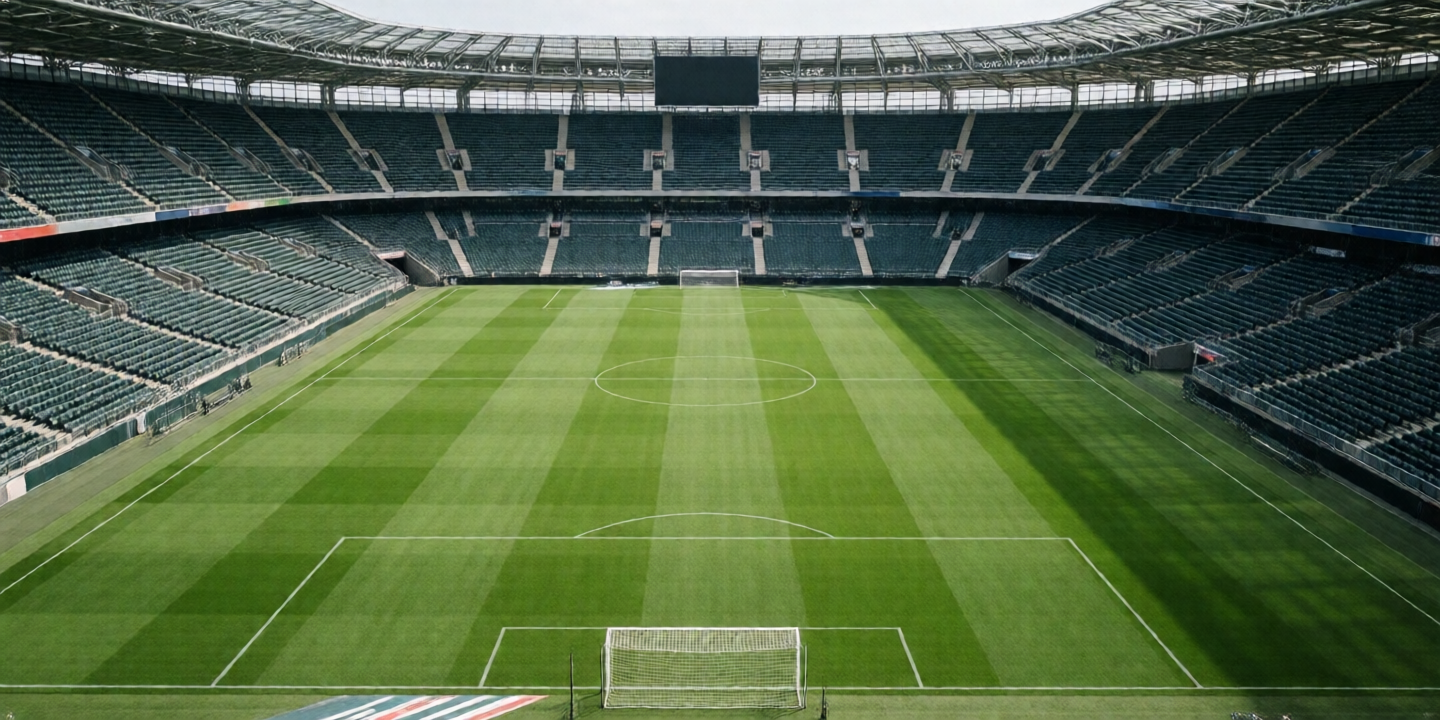
Photo by Alex Luciano on Pexels
The 2026 tournament is not just a bigger version of Qatar 2022. The geography changes everything. A match in Vancouver and one in Miami involve different climates, travel distances, time zones, stadium designs, and recovery demands. That matters to supporters, teams, broadcasters, and anyone building a match prediction model. The smart approach is to separate confirmed tournament facts from promotional noise, then track net costs if you are travelling or placing legal wagers. World Cup Hub is built around that slightly boring but useful habit: check the numbers first, enjoy the drama second.
Want the tournament basics in one place?
The Quick Comparison
| Category | Confirmed 2026 World Cup detail | Why it matters |
|---|---|---|
| Host countries | United States, Canada, Mexico | Three-market tournament planning |
| Teams | 48 | More fixtures and wider competitive range |
| Matches | 104 | Increased scheduling and travel complexity |
| Host cities | 16 | Major differences in climate and transport |
| Opening match | June 11, 2026, Mexico City | Tournament begins in Mexico |
| Final | July 19, 2026, New York/New Jersey | MetLife Stadium hosts the final |
| Atlanta matches | 8 | Includes a semifinal |
| Los Angeles matches | 8 | Includes major fan programming |
| Competition window | 39 days | Longer than the traditional 32-team format |
This table gives the clean version. The less obvious version is that “48 teams” does not simply mean 16 extra teams and a few more matches. The group-stage design creates a new qualification path, and the knockout bracket adds more pressure on squad depth. FIFA’s official World Cup 2026 competition information remains the best place to confirm fixtures, venues, and tournament updates because local event pages can focus heavily on promotion rather than the complete competition picture.
For a fan, the key practical split is between match attendance and city experience. Atlanta markets itself as the “soccer city of the South,” with Mercedes-Benz Stadium, Atlanta United supporters, Southern food, music, and local culture forming part of the event. Los Angeles is taking a broader festival approach, promoting eight matches, official fan zones, and the FIFA Fan Festival at the LA Memorial Coliseum in Exposition Park. Those are different products, basically: Atlanta is compact and stadium-led; Los Angeles is spread across a huge metropolitan region.
complete 2026 World Cup host city guide
Round 1: Which Host Cities Offer the Strongest Match-Day Experience?
The strongest match-day experience depends on stadium access, public transport, fan programming, and the number of matches a city hosts. Atlanta and Los Angeles each stage eight games, but Atlanta offers a more concentrated stadium district, while Los Angeles combines SoFi Stadium-area events with regional fan zones and Exposition Park programming. Mexico City adds historic atmosphere at Estadio Azteca, and New York/New Jersey carries the prestige of hosting the 2026 final.
Atlanta is an interesting case because Mercedes-Benz Stadium was designed for major events, with a retractable roof and a central location near downtown attractions. The city’s official World Cup programme describes Atlanta as a place where sport, culture, and community overlap, but the real advantage for visitors is simpler: a manageable core around Centennial Olympic Park, the stadium, the Georgia Aquarium, and the College Football Hall of Fame. That reduces the hassle between sightseeing and kick-off, although hotel prices and rail demand will still rise sharply during knockout matches.
Los Angeles is bigger, louder, and less forgiving if your itinerary is sloppy. The city promises 39 days of fan celebrations, with the LA Memorial Coliseum serving as a major festival location. However, Los Angeles traffic can turn a short map distance into a long pre-match problem, especially around Downtown Los Angeles, Exposition Park, Inglewood, and SoFi Stadium. My practical takeaway is to choose accommodation based on your main match venue, not on the cheapest nightly rate several suburbs away. The apparent saving can disappear in rideshare fees and lost time.
- Choose Atlanta for a concentrated football weekend.
- Choose Los Angeles for a longer mix of matches, music, food, and fan events.
- Choose Mexico City for tournament history and a powerful football culture.
- Choose New York/New Jersey for the final and the largest international spotlight.
See the city details before booking anything.
Round 2: How Will Travel and Scheduling Affect Teams?
Travel and scheduling may become the biggest tactical variable at the 2026 World Cup because the tournament spans three countries, 16 host cities, and several time zones. FIFA’s 104-match schedule creates more opportunities for rotation, but teams still face long-haul flights, changing weather, altitude concerns in Mexico, and compressed recovery between matches. Supporters should treat the fixture location as part of the match context, not as background decoration.
The most useful contrarian point is that distance alone does not decide fatigue. A team travelling from Seattle to Miami faces a different burden from one moving between nearby cities, but local climate adaptation can matter just as much. Mexico City sits at roughly 2,240 metres above sea level, while Miami brings heat and humidity and Vancouver can offer cooler conditions. A squad with strong sports-science preparation, flexible midfield pressing, and a deep bench may gain more from the expanded format than a team relying on the same starting eleven every four days.
For prediction work, I would record these variables before comparing team quality:
- Previous match location and travel distance.
- Rest days between fixtures.
- Kick-off time and local weather.
- Altitude, humidity, and likely heat exposure.
- Number of substitutions and rotation in the previous match.
- Whether the team has already secured qualification from its group.
This is where World Cup Hub’s team tactics and player-stat coverage becomes useful. A headline such as “Team A has won four straight” is not enough. You want to know whether those wins came against high-ranked opponents, whether the full-backs are accumulating heavy minutes, and whether the team’s expected goals declined despite favourable results. For people assessing football betting markets, that distinction is crucial. A popular team can be a poor value selection when public enthusiasm has already pushed the price too far.

Photo by Pixabay on Pexels
According to FIFA’s Laws of the Game and competition resources, tournament analysis should account for match conditions rather than treating every fixture as an identical sample. Also, World Athletics climate guidance illustrates the broader performance issue: heat, humidity, and recovery conditions can materially affect elite athletes. These are not magical prediction shortcuts, obviously, but they are better inputs than repeating a team’s win-loss record.
Round 3: What Should Fans Know About Betting and Tournament Analysis?
Fans should treat 2026 World Cup betting as a probability exercise, not as a second tournament running in their wallet. Legal availability, age requirements, taxation, and market rules vary by jurisdiction across the United States, Canada, and Mexico, so no single betting recommendation applies everywhere. Compare the implied probability, market margin, team news, and your own stake limits before placing any wager.
A basic example helps. Decimal odds of 2.00 imply a 50% break-even probability before fees or market margin. Odds of 1.80 imply approximately 55.6%, calculated as 1 divided by 1.80. If your estimated probability is only 53%, the shorter price is not automatically good because you like the team. That is the exact point where fan emotion quietly becomes a negative expected-value habit.
World Cup Hub covers predictions, tactics, player statistics, and tournament news, but responsible analysis still needs guardrails:
- Use licensed operators permitted in your location.
- Check whether the displayed odds are decimal, fractional, or American.
- Set a fixed bankroll and stake percentage before the tournament.
- Track turnover, returns, bonuses, and net position separately.
- Do not chase a losing bet after extra time or penalties.
- Verify line-ups and injury reports before using player markets.
- Treat promotional credits as conditional value, not cash.
A useful operational edge is tracking market movement against confirmed information. For example, a goalkeeper injury announced two hours before kick-off can move a match price quickly, while an unverified social-media rumour may move nothing meaningful at all. Keep a timestamped record of the odds you saw, the odds you took, and the final result. After 20 or 30 bets, you can review whether your assumptions were profitable or merely entertaining. That little spreadsheet is less glamorous than a hot tip, but it tells the truth more reliably.
2026 World Cup match prediction methods
If you are comparing betting offers, remember that a large advertised bonus can have a smaller real value after wagering conditions, maximum winnings, excluded markets, and expiry periods. The National Council on Problem Gambling recommends setting limits and seeking help if gambling becomes difficult to control. A responsible gambling approach is not a disclaimer pasted at the bottom; it is part of the calculation. If the stake affects rent, food, or sleep, the correct price is zero.
Review the latest analysis before making a tournament plan.
The Final Score & Who Should Pick What
The 2026 World Cup is best understood as three connected experiences: a 48-team football competition, a massive North American travel event, and a complicated betting-information environment. Atlanta stands out for a concentrated stadium experience and a semifinal; Los Angeles is stronger for a long festival programme and entertainment mix; Mexico City brings historic weight and altitude; New York/New Jersey owns the final-stage prestige. None is universally “best,” because the right choice depends on your match priority, budget, and tolerance for transport chaos.
For football analysis, the tournament’s standout opportunity is the extra context created by the expanded schedule. Team depth, recovery, travel, climate, and qualification status may separate a well-priced underdog from a fashionable but overvalued favourite. The most useful workflow is straightforward: confirm the fixture, inspect the line-up, compare the market probability with your estimate, then record the result regardless of whether it supports your opinion. World Cup Hub can help with the data and tactical context, but the final decision should remain disciplined and legal.

Photo by Sima Ghaffarzadeh on Pexels
My final pick is not one city or one team. It is a process: book travel around confirmed fixtures, build in recovery time, use official information, and keep betting stakes small enough that losing them changes nothing important. That sounds less exciting than calling the champion in March, sure, but it survives contact with reality. The 2026 World Cup will produce enough drama without adding avoidable financial nonsense.
Frequently Asked Questions
Q: What is the 2026 FIFA World Cup?
A: The 2026 FIFA World Cup is a 48-team men’s football tournament hosted by the United States, Canada, and Mexico from June 11 to July 19, 2026. It will feature 104 matches across 16 host cities, making it the largest World Cup in tournament history by team and match count. The final is scheduled for MetLife Stadium in New York/New Jersey, while the opening match takes place in Mexico City.
Q: How many teams and matches are in the football 2026 World Cup?
A: The football 2026 World Cup will include 48 teams and 104 matches. FIFA expanded the field from 32 teams to increase global representation and create a longer competition schedule. The format also gives more national teams a route to the knockout phase, so squad depth and late-tournament rotation become more important than they were in Qatar 2022.
Q: How should I choose a 2026 World Cup host city?
A: Choose your host city according to the stadium, match dates, transport network, and planned fan activities rather than hotel price alone. Atlanta offers eight matches and a compact downtown experience, while Los Angeles offers eight matches plus 39 days of celebrations and a FIFA Fan Festival at the LA Memorial Coliseum. Mexico City suits fans prioritising history, and New York/New Jersey suits visitors targeting the final.
Q: What is the difference between Atlanta and Los Angeles for the World Cup?
A: Atlanta is generally more compact and stadium-focused, while Los Angeles offers a broader metropolitan festival experience. Mercedes-Benz Stadium will host eight Atlanta matches, including a semifinal, whereas Los Angeles will combine eight matches with fan zones and programming at Exposition Park. Los Angeles can require more careful travel planning because distances between accommodation, events, and SoFi Stadium may be substantial.
Q: How can I analyse 2026 World Cup matches before betting?
A: Start by comparing confirmed line-ups, rest days, travel, climate, tactical matchups, and current odds. Convert decimal odds into implied probability by dividing 1 by the decimal price, then compare that figure with your own estimate after accounting for bookmaker margin. Use legal, licensed services only, record every stake and return, and avoid increasing your stake simply because an earlier prediction lost.
Q: Why might a World Cup prediction fail even when the team is stronger?
A: A prediction can fail because football has high variance, and travel, injuries, red cards, weather, penalties, or tactical changes can overwhelm the pre-match quality gap. In 2026, the three-country geography adds further uncertainty through time zones, altitude, humidity, and recovery demands. Review the original assumptions after the match instead of judging the process only by the final score.
Q: Is World Cup betting free, and what are the requirements?
A: Betting is not free because every wager carries financial risk, and legal requirements differ by location. You may need to meet minimum-age rules, complete identity verification, use an approved payment method, and live in a jurisdiction where the operator is licensed. Read bonus wagering rules and expiry dates carefully, and never treat promotional credits as guaranteed profit.
responsible football betting guide
The 2026 World Cup rewards fans who prepare without overcomplicating the job: confirm the schedule, understand the host city, track team conditions, and keep your financial exposure controlled. Follow World Cup Hub for daily predictions, tactical breakdowns, player statistics, and tournament coverage as the event develops.
Ready to follow the tournament with cleaner data and less noise?
Report complete.
World Cup Hub · Analytical Archive