Inside University of Oklahoma: A 7-Drill Football Upgrade
The best football training drills combine ball control, passing, movement, speed, strength and decision-making rather than isolating one skill forever. Players can build a useful weekly programme from...
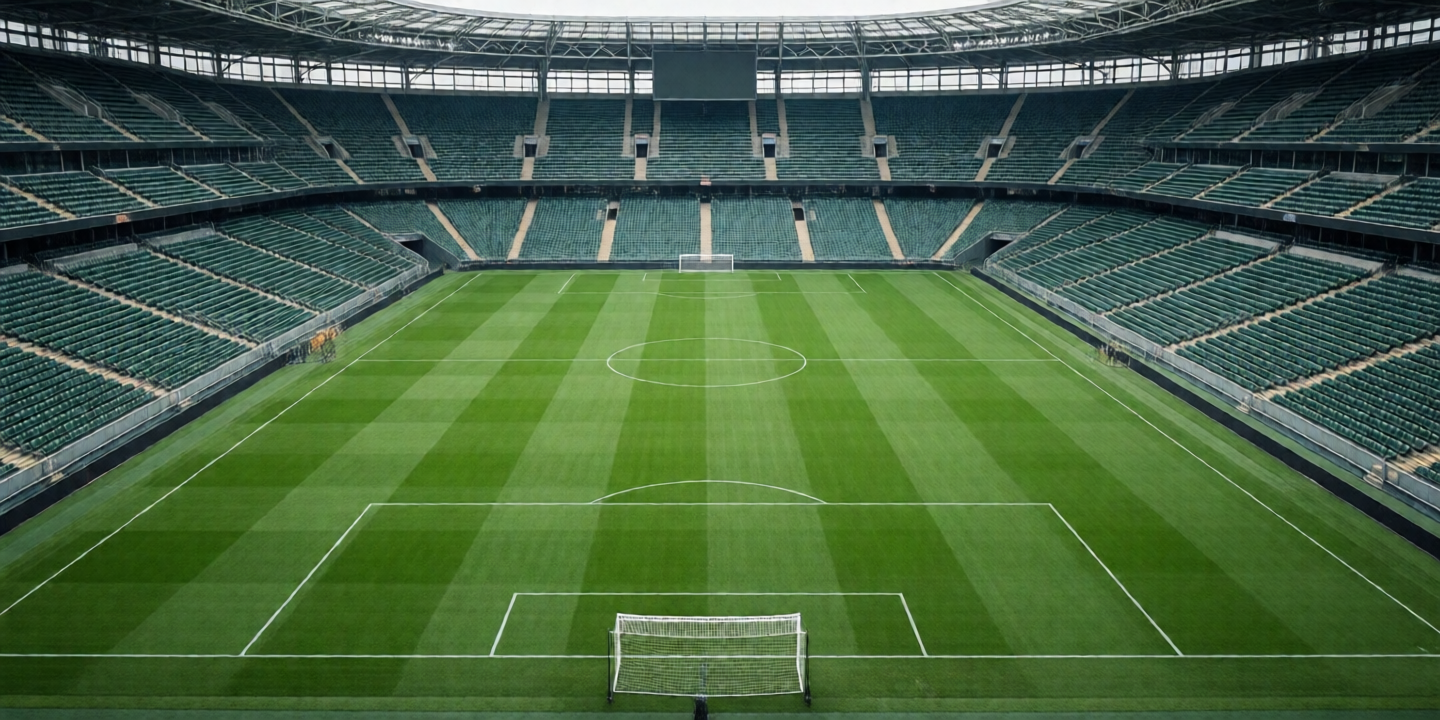
Inside University of Oklahoma: A 7-Drill Football Upgrade
The best football training drills combine ball control, passing, movement, speed, strength and decision-making rather than isolating one skill forever. Players can build a useful weekly programme from seven core drills: sole-roll touches, cone dribbling, wall passing, first-touch gates, 1v1 shielding, resisted sprints and small-sided games. These methods work for youth players, recreational footballers and competitive athletes training on grass, turf or a small outdoor court. The University of Oklahoma strength and conditioning model also highlights the value of movement coaching, structured workouts and football-specific physical preparation. A 45-minute session can include 10 minutes of technical warm-up, 20 minutes of ball work, 10 minutes of speed or strength training and 5 minutes of match-like decisions. Start with clean technique at moderate speed, record successful repetitions, then increase pressure only when accuracy stays above 80 percent.

Photo by Franco Monsalvo on Pexels
Football training gets overcomplicated fast. People download a twelve-week plan, buy three types of cones, then spend half the session looking for a pump. Not ideal.
The useful answer is simpler: choose drills that transfer to actual football situations, measure the output, and repeat them often enough for the movement to stick. A beautiful stationary touch is nice. A clean touch while scanning, turning and escaping pressure is what gets you out of trouble.
World Cup Hub covers match predictions, team tactics, player statistics and tournament trends, so the same principle applies here: context matters. A drill is not automatically good because it looks technical. It is good when it improves a measurable football action.
Want a practical starting point before you train?
Step 1: Build a Technical Base
Close control comes first because every attacking and defensive action begins with the ball arriving somewhere near your feet. The first step is to create a repeatable technical base using short touches, both-foot work and controlled changes of direction. Ten focused minutes of ball mastery can be more useful than thirty minutes of random tricks if every repetition has a purpose.
Start with a ball, four cones and a five-by-five-metre square. Keep the ball within one step of your body and alternate between the inside, outside and sole of each foot. Use 30-second rounds with 20 seconds of rest, completing six rounds before moving to directional work.
Drill 1: Sole Rolls and Inside-Outside Touches
Place the ball in front of you and roll it laterally with the sole of your right foot. Stop it with the inside of the left foot, then push it back across. After 30 seconds, switch the lead foot. The movement is basic, but it trains ankle mobility, balance and the ability to keep the ball under your centre of gravity.
Add inside-outside touches next. Push the ball two metres with the inside of the right foot, take it back across your body with the outside of the same foot, and repeat on the left. Stay light through the knees and avoid swinging the leg from the hip. The point is controlled rhythm, not maximum speed.
A useful target is 40 clean touches in 30 seconds without the ball leaving the square. If the ball escapes more than three times, slow down. That is not failure; it is feedback. Speed added before control usually creates messy habits that become annoying to remove later.
Drill 2: Cone Escape Dribbling
Set five cones in a straight line with 1.5 metres between each marker. Dribble through using the right foot on the first run, the left foot on the second and both feet on the third. Then change the pattern: approach each cone slowly, push the ball sharply beyond it, and accelerate for three metres.
This drill teaches a detail that ordinary cone slaloms often miss: the exit touch. Players can weave through cones perfectly and still lose the ball when leaving pressure. The final touch should move the ball into available space, not directly into the next defender.
Complete four runs per pattern and record the best time only if the ball stays within two metres of your body. A fast run with a loose touch is not a useful personal record. It is just cardio wearing a football costume.
For more technical progression ideas, use our [Internal Link: beginner football skills guide] alongside the drill sequence.
Step 2: Improve Passing and First Touch
Passing drills become valuable when they connect the first touch to the next action. A stationary two-touch pass is a starting point, not the finished product. Footballers need to receive across the body, scan before contact and play away from pressure. That is why a wall, rebounder or reliable partner is enough to build serious repetition.
The FIFA Training Centre regularly presents football practice around perception, decision-making and game context rather than technique in isolation. That approach is worth copying. Give every pass a direction and every first touch a reason.
Drill 3: Wall Passing With Scanning
Stand four to six metres from a solid wall. Pass with the right foot, receive with the left across your body and return the ball. Then reverse the pattern. After five repetitions, look over one shoulder before the ball comes back. You are not checking a real opponent yet, but you are training the habit of gathering information before the next action.
Use three rounds:
- Two-touch passing, 60 seconds per foot.
- Receive across the body, 60 seconds per foot.
- One-touch passing, 30 seconds per foot.
For an intermediate player, a strong benchmark is 50 accurate passes in 60 seconds with no more than two poor rebounds. Beginners should prioritise clean contact and a stable body position. The ankle should be locked, the supporting foot should point toward the target and the hips should remain available for the next movement.
The contrarian bit: do not chase one-touch passing too early. If the first touch is unreliable, one-touch work can hide the actual problem by turning every mistake into a rushed pass. Two-touch quality creates better footballers than frantic one-touch volume.
Drill 4: First-Touch Gates
Build two cone gates, each one metre wide, three metres apart and angled in different directions. Pass against a wall or receive from a partner, then take the first touch through one gate. The caller, partner or random number determines the target gate just before the ball arrives.
This creates a modest decision load. You must read the cue, adjust your body and direct the ball. Complete 20 repetitions on the right foot and 20 on the left, then count how many first touches pass cleanly through the selected gate.
A score of 32 out of 40 is a practical target for a developing player. Advanced players can reduce the gate width to 75 centimetres, increase the passing distance to eight metres or add a passive defender. Do not add all three at once. Training difficulty should rise in small steps, or the exercise becomes a lottery.
The United States Soccer Federation also emphasises age-appropriate coaching and progressive learning environments. That matters here: a nine-year-old needs coordination and confidence, while a senior midfielder can handle speed, pressure and tactical constraints.

Photo by Franco Monsalvo on Pexels
Step 3: Add Speed, Strength and Change of Direction
Football speed is not just straight-line sprinting. It includes the first three steps, braking, turning and accelerating again. A player who reaches top speed quickly but cannot stop safely is not especially useful in a crowded midfield. The physical block should therefore combine acceleration, deceleration and basic strength.
The University of Oklahoma football programme provides resources on strength and conditioning, nutrition and individual movement coaching. Its structure reflects a sensible principle: physical training should support movement quality rather than turn every session into a punishment contest.
Drill 5: Five-Metre Reaction Sprints
Set three cones: one starting cone and two target cones placed five metres left and right. Begin in a balanced athletic stance. A partner points left or right, calls a number or gives a visual cue, and you sprint to the target, decelerate under control and return to the middle.
Complete six repetitions with 20 seconds of rest. Measure the time from the cue to the target rather than measuring the return jog. The aim is a sharp first movement, not a dramatic dive at the cone.
After two weeks, compare the average of six attempts. For example, a player improving from 1.42 seconds to 1.31 seconds over five metres has gained roughly 7.7 percent in reaction-sprint performance. That is a meaningful change, assuming the timing method stays consistent.
Drill 6: Lateral Bound and Accelerate
Stand on one leg, make a controlled lateral bound of approximately one metre, land softly and hold the position for one second. Then drive forward for five metres. Perform four repetitions per side, resting 30 to 40 seconds between efforts.
This links single-leg stability to acceleration. Keep the knee aligned over the middle of the foot and avoid allowing it to collapse inward. If landing quality deteriorates, reduce the distance. Players do not need to prove toughness by turning a coordination drill into a knee-wobble festival.
For younger players, replace the bound with a side step. For experienced athletes, add a light resistance band around the thighs, provided the band does not distort the running mechanics. Strength and conditioning should be supervised by a qualified coach when possible, especially after injury.
Drill 7: Repeated Sprint With the Ball
Place cones at 5, 10 and 15 metres. Sprint with the ball to the first cone, slow down, cut at the second and accelerate past the third. Walk back for recovery. Complete six repetitions, recording the fastest and slowest times.
The gap between fastest and slowest efforts tells you more than the fastest effort alone. If the first run is 4.2 seconds and the sixth is 5.3 seconds, the 26 percent drop-off suggests the recovery period, conditioning level or technical control needs attention. If the gap is only 8 percent and the ball stays close, the session is probably well matched to your current level.
A non-obvious point: many players should reduce their sprint distance before adding more repetitions. Five high-quality 10-metre accelerations can improve match movement more effectively than twelve tired 30-metre runs, particularly for defenders, midfielders and smaller-sided football.
Ready to connect physical work with football decisions?
Step 4: Transfer Skills Into Match Situations
Technical drills improve contact quality, but football is played with opponents, teammates, space and consequences. The transfer stage adds pressure without making the session chaotic. Start with shielding and 1v1 work, then move into small-sided games where players must scan, communicate and choose quickly.
Drill 8: Shield, Turn and Escape
Create a six-by-six-metre square with a server, an attacking player and a defender. The server passes into the attacker, who must protect the ball for three seconds before turning through one of two exit gates. The defender begins passively, then applies realistic pressure.
The attacker should use the body between the defender and the ball, keep the far foot available and take the first touch away from pressure. Do not lean constantly into the defender. That wastes energy and makes fouls more likely. Better shielding comes from foot position, hip angle and early information.
Run five attacks from each side, then change roles. Count successful escapes rather than goals. A player who escapes seven of ten attempts has a useful baseline. Once that becomes reliable, allow the defender to press immediately after the pass.
Drill 9: 3v3 Plus Two Neutral Players
Use a 20-by-15-metre area with two neutral players positioned on the outside. The team in possession plays 5v3, but the neutral players are limited to one or two touches. Award one point for five consecutive passes and two points for a pass that breaks a defensive line.
This design creates frequent involvement without requiring a full squad. Players receive under pressure, look for the next pass and react immediately after losing possession. Rotate neutral players every two minutes so nobody hides on the outside.
A 12-minute game can be divided into four blocks of three minutes. Track:
- Successful forward passes.
- First-touch errors.
- Ball recoveries within five seconds.
- Times a player scans before receiving.
- Goals or line-breaking passes created.
The last measurement is difficult to record, but it is the most valuable. A drill should not merely produce more touches; it should produce better decisions. The UEFA Training Ground offers additional examples of possession, transition and positional practices that can help coaches build this progression.
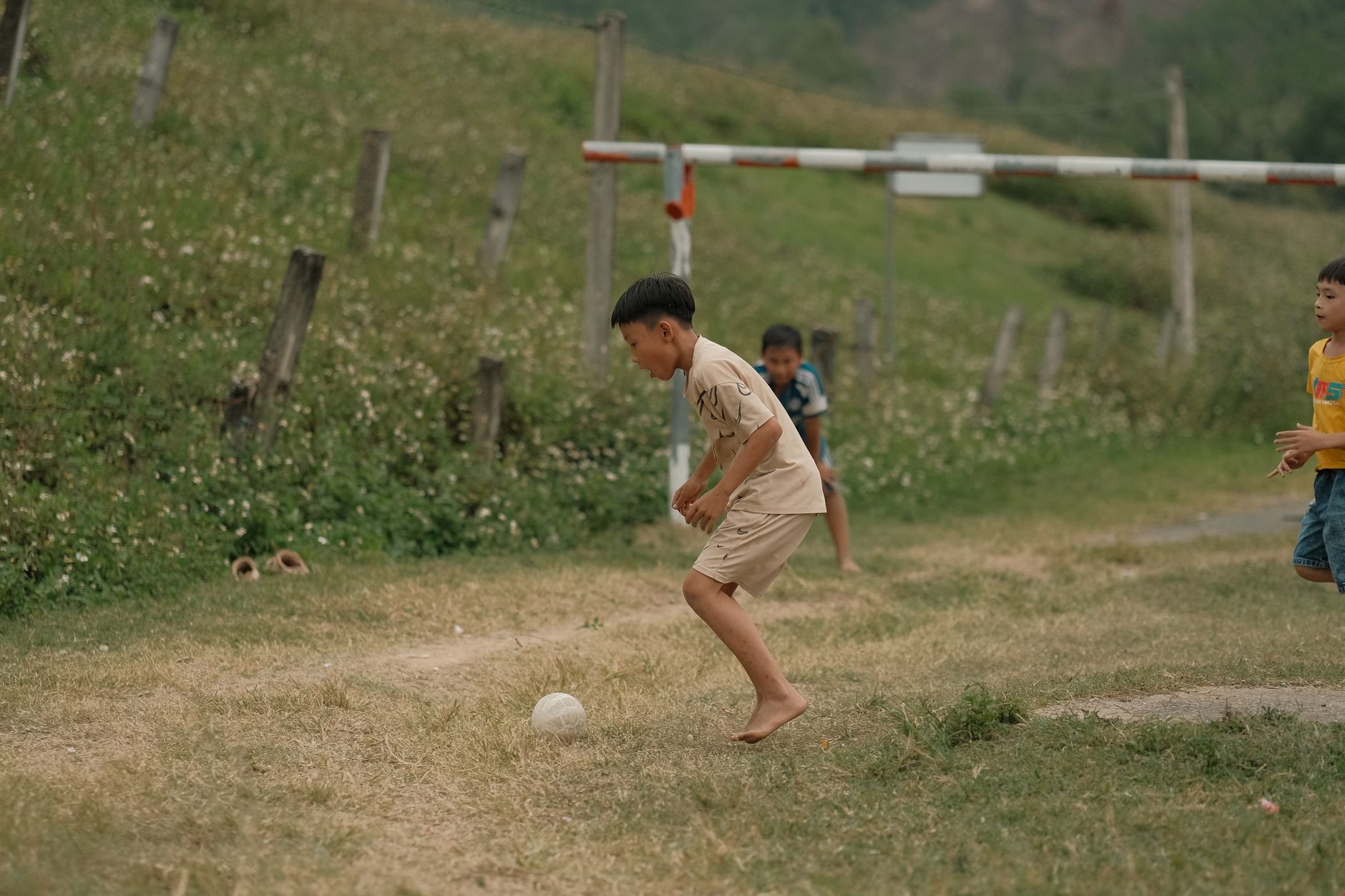
Photo by Pew Nguyen on Pexels
Step 5: Verification
Verification means testing whether the drills improved football performance, not whether the session left you exhausted. Use the same pitch dimensions, ball type, footwear, timing method and work-to-rest ratio when comparing results. Otherwise, the numbers become decorative.
A simple four-week test battery can include:
| Test | Setup | Baseline target | What it shows |
|---|---|---|---|
| Wall passing | 60 seconds, alternating feet | 45 accurate passes | Passing rhythm and control |
| First-touch gates | 40 receptions | 32 successful touches | Directional first touch |
| Five-metre sprint | Six attempts | Average time recorded | Acceleration |
| Repeated ball sprint | Six runs | Under 12% time drop-off | Speed endurance |
| 3v3 decision game | 12 minutes | Forward actions counted | Transfer to play |
Test once before the programme, again after two weeks and again after four weeks. A realistic improvement might be 10 percent more accurate wall passes, 0.05 seconds faster over five metres and three additional successful forward actions in the 3v3 game.
Do not treat all improvements as equally important. A one-second improvement in a cone run may matter less than a better first touch when facing pressure. Football outcomes are interconnected, so prioritise the metric closest to your position and playing style.
After thirty mixed training sessions, a player should ideally show cleaner touches under pressure, not just faster isolated drills. That is the real check. If the testing numbers rise but match performance does not, the training probably needs more opposition, scanning or tactical constraints.
The American College of Sports Medicine provides broader guidance on physical activity and progression. Its general message is useful for football: increase workload gradually, recover properly and avoid treating every session as a test of character.
Need a clearer way to compare training progress?
Troubleshooting Common Failures
Most football training problems are not caused by a lack of motivation. They come from poor dosage, unclear targets or drills that do not resemble the player’s actual role. Fix the setup before adding more volume. More repetitions of the wrong movement are still the wrong movement, only more confidently.
Problem: The Ball Keeps Running Away
Reduce the space and lower the speed. Use the inside of the foot for control, keep the ankle firm and soften the receiving leg on contact. Players often stab at the ball because they are arriving too quickly, so ask them to take one preparation step before the touch.
Use a 1:3 error rule: if more than one out of every three touches creates a recovery chase, the drill is too difficult. Bring the ball closer, reduce the passing distance or remove the passive defender.
Problem: Passing Accuracy Falls After Ten Minutes
The likely causes are fatigue, poor body orientation or an unrealistic tempo. Check whether the supporting foot points toward the target and whether the player looks before receiving. If the player cannot complete 40 accurate passes at 70 percent intensity, asking for 100 at full speed is mostly noise.
Try three 45-second rounds instead of one long block. Rest for 30 seconds, then repeat. Quality should remain above 80 percent across the session.
Problem: Players Look Good Alone but Disappear in Matches
Add a decision, opponent or time limit. A player may have excellent cone technique but no habit of scanning before receiving. Use colour calls, gate choices, passive defenders and directional goals to force information processing.
This is where the 3v3 plus two neutral players game earns its keep. The player must receive, scan, protect the ball and choose an action in seconds. It is less tidy than a cone drill, but football is less tidy too.
Problem: Sprint Times Improve but Players Tire Quickly
Review recovery and total volume. Six high-quality sprints with 20 to 40 seconds of rest are different from fifteen repetitions performed with poor mechanics. Add one repeated-sprint block per week before adding a second block.
Sleep, hydration and nutrition also affect output. The University of Oklahoma football resources include nutrition guidance because physical adaptation is not created by training alone. If a player has persistent pain, dizziness or unusual fatigue, stop the session and seek qualified medical advice.
Problem: The Session Feels Too Easy
Do not immediately add ten more drills. Increase one constraint at a time:
- Reduce the available space.
- Increase the passing distance.
- Limit touches.
- Add a passive defender.
- Add a scoring condition.
- Reduce rest by 5 to 10 seconds.
This order preserves technique while increasing pressure. The best football training drills are adjustable, not permanently brutal.
How Many Football Training Drills Should You Do in One Session?
A balanced football session usually needs four to seven drills, depending on duration, age and intensity. A 45-minute individual workout can use four drills, while a 90-minute team practice can include seven or eight with tactical games. More than eight often reduces quality unless the exercises are very short.
A useful structure is 10 minutes of warm-up and ball mastery, 20 minutes of technical work, 15 minutes of speed or strength, and 15 to 25 minutes of game-based practice. Youth players need shorter blocks and more variation, while experienced players can sustain longer technical intervals. Track successful actions rather than simply counting exercises completed.
Should You Train Football Skills Every Day?
You can practise light technical football skills daily, but high-intensity sprinting, repeated jumping and hard 1v1 work require recovery. Ten to 20 minutes of easy touches, wall passing and mobility may fit on most days, while intense speed sessions are usually better separated by at least 48 hours for developing players.
A weekly plan might include technical work on Monday, speed and strength on Tuesday, recovery or light passing on Wednesday, small-sided football on Thursday, rest on Friday and a match or intensive session at the weekend. Adjust this around school, work, matches and injury history. Consistency beats a heroic session followed by four days of soreness.
Why Do Some Popular Football Drills Stop Working?
A drill stops producing useful improvement when it becomes automatic, too easy or disconnected from match demands. If a player can complete a cone sequence perfectly but never scans, changes speed or responds to pressure, the exercise has reached its current limit.
Progress by changing direction, timing, pressure or decision-making. For example, turn a basic wall pass into a first-touch gate exercise, then add a visual cue and a passive defender. The drill stays familiar enough to measure, but difficult enough to teach something new.
Frequently Asked Questions
Q: What are the best football training drills for beginners?
The best beginner football training drills are close-control touches, cone dribbling, wall passing and simple first-touch gates. These exercises teach balance, ball contact and directional control without requiring a full team or expensive equipment. Start with 30-second rounds and aim for accuracy above speed. Two or three sessions per week, each lasting 30 to 45 minutes, is enough to build a useful foundation.
Q: How can I improve football ball control quickly?
You can improve football ball control by performing short daily sessions with both feet and adding directional first touches. Use sole rolls, inside-outside touches, wall passing and cone escape dribbling for 10 to 15 minutes, then record clean repetitions. Keep the ball within one step of your body and slow down whenever more than 20 percent of touches become recovery touches.
Q: What is the difference between football drills and match training?
Football drills isolate or emphasise a specific action, while match training combines technique with pressure, space, teammates and decisions. Wall passing can improve contact quality, but 3v3 football tests whether that pass survives defensive pressure. A complete programme should use both, moving from controlled repetitions toward small-sided games and realistic constraints.
Q: How often should I do football speed and sprint drills?
Most players should complete high-intensity football speed drills one or two times per week, with roughly 48 hours between demanding sessions. Use six to eight short accelerations, usually between five and 15 metres, and stop when technique breaks down. Players returning from injury or training on hard surfaces should reduce volume and follow qualified medical or coaching advice.
Q: Why do my football drills work in training but not during matches?
Football drills may fail to transfer when they contain no scanning, opposition, time pressure or directional decision. Add a passive defender first, then introduce limited touches, target gates or a scoring condition. A 3v3 plus two neutral players game is useful because it forces players to receive, scan, pass and react in a compressed environment.
Q: Do I need a gym to improve football strength?
You do not need a gym to build useful football strength, although gym equipment can support progressive loading. Bodyweight split squats, single-leg bridges, calf raises, lateral bounds and controlled accelerations can improve stability and force production. Complete two or three sets with clean technique, and increase difficulty gradually rather than adding fatigue for its own sake.
Q: What equipment is required for the best football training drills?
The minimum equipment is a football, four cones, suitable footwear and a safe training surface. A wall, rebounder, resistance band and stopwatch add useful options but are not essential. For individual sessions, a five-by-five-metre area is enough for ball mastery, while small-sided games need a larger marked space and at least three players.
Final Takeaway: Use the Next Four Weeks Properly
The best football training drills are not the most complicated ones. They are the drills you can repeat, measure and gradually connect to match decisions. Begin with sole rolls, cone escape dribbling, wall passing and first-touch gates; add five-metre reaction sprints and repeated ball work; then verify progress with a 3v3 game and consistent timing.
Your next practical action is to schedule three sessions per week for four weeks. Record wall-pass accuracy, first-touch success, five-metre sprint average and repeated-sprint drop-off before starting, at the 14-day mark and after session 12. If the numbers improve but match performance does not, add more pressure and scanning rather than simply doing more repetitions. World Cup Hub will keep the wider football conversation focused on tactics, player output and the details that actually change outcomes.
Want to keep building a smarter football routine?
Report complete.
World Cup Hub · Analytical Archive