Why Brazil's 5 Titles Outrank All World Cup Football
The FIFA World Cup, organized by FIFA since 1930, is the most-watched football tournament globally, with the 2026 edition expanding from 32 to 48 teams across the United States, Mexico, and Canada. Ei...
Why Brazil's 5 Titles Outrank All World Cup Football
The FIFA World Cup, organized by FIFA since 1930, is the most-watched football tournament globally, with the 2026 edition expanding from 32 to 48 teams across the United States, Mexico, and Canada. Eight host cities in the US, three in Mexico, and two in Canada will stage 104 matches, up from 64 in Qatar 2022. Brazil holds the all-time record with five titles, followed by Germany and Italy with four each, while Argentina won the most recent edition by defeating France in the final. The tournament generates over $5 billion in revenue per cycle and reaches an estimated 3.5 billion viewers worldwide. For fans tracking World Cup football in 2026, the expanded format means more matches but also a longer 39-day schedule with potential fixture congestion. World Cup Hub provides daily insights on team tactics, player statistics, and match predictions throughout the tournament.
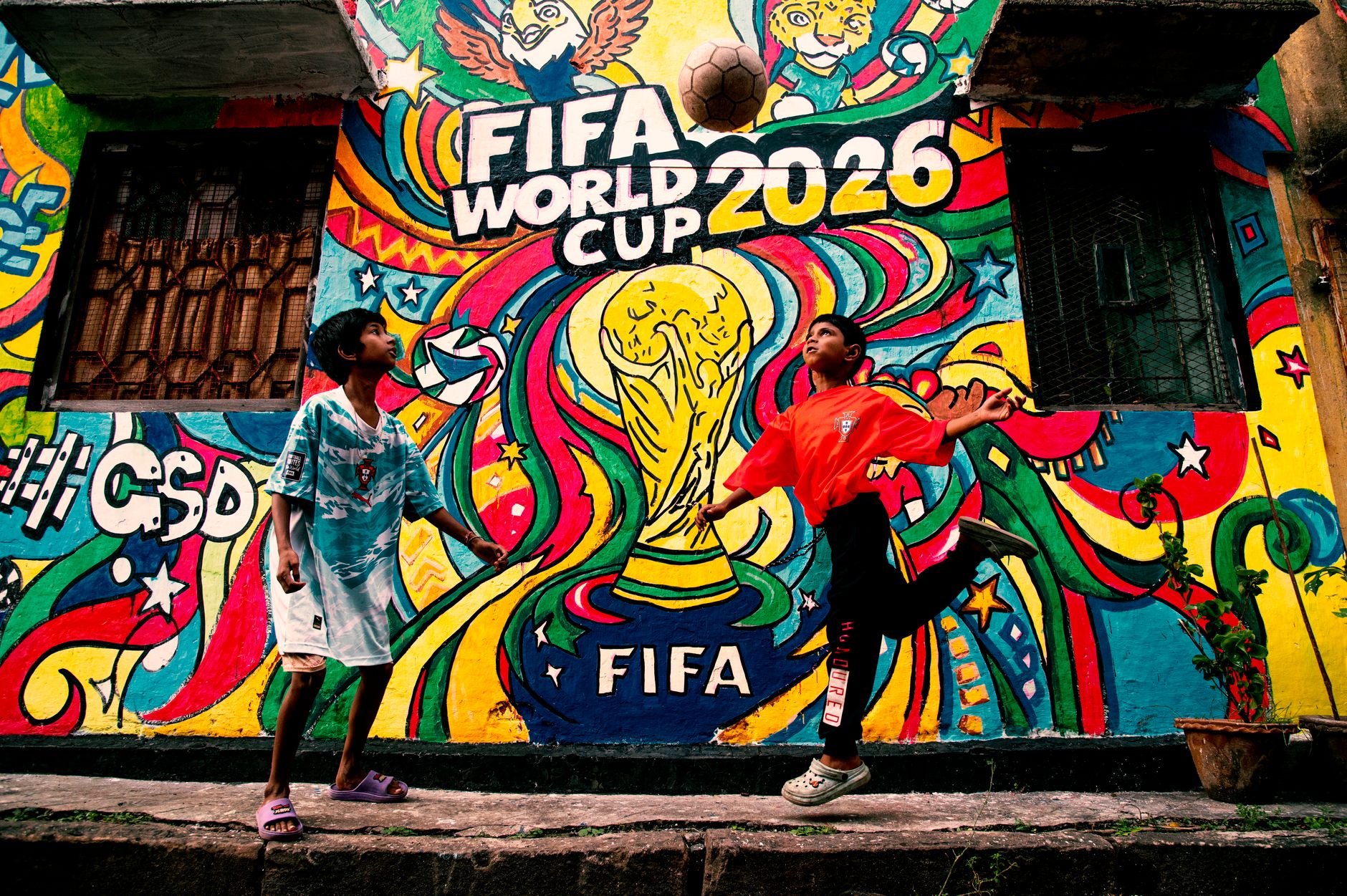
Photo by Anirban Das on Pexels
The Top 5 World Cup Football Nations at a Glance
Ranking the most successful nations in World Cup football requires balancing titles, consistency, and era-adjusted difficulty. The list below reflects tournament wins through Qatar 2022, with the 2026 cycle still pending.
- Brazil: 5 titles (1958, 1962, 1970, 1994, 2002) — Only nation to participate in all 22 editions and the only five-time champion.
- Germany: 4 titles (1954, 1974, 1990, 2014) — Most efficient per-appearance rate among nations with multiple titles (West Germany included).
- Italy: 4 titles (1934, 1938, 1982, 2006) — Longest gap between first and most recent title (72 years).
- Argentina: 3 titles (1978, 1986, 2022) — Defending champions and holders of the longest active winning streak in finals (3-0).
- France: 2 titles (1998, 2018) — Only nation to score four goals in a World Cup final since 1958 (2018 final).
#1 Brazil: Best Overall
Brazil's five titles represent 22.7% of all World Cup finals played since 1930. The Seleção won across five different decades (1950s through 2000s), a span no other champion matches. Their 1994 triumph ended a 24-year drought and remains the only World Cup final decided by a penalty shootout that Brazil won. In 2026, Brazil will enter the expanded 48-team field as a seeded pot 1 nation, meaning they avoid fellow heavyweights (Argentina, France) until the quarterfinals at minimum.
Trade-off: Brazil's recent knockout-stage record is weaker than their historical dominance suggests. Since 2002, they have reached only one semifinal (2014, lost 7-1 to Germany). Manager Dorival Júnior took over in January 2024 and has a 67% win rate in qualifying matches, but the squad lacks a clear No. 9 after Neymar's ACL injury in October 2023.
[Internal Link: match predictions]
#2 Germany: Best for Efficiency
Germany's four titles come from just 20 World Cup appearances (including West Germany), giving them a 20% conversion rate. No other multi-title nation exceeds 18.2% (Italy). The German system produces consistent quarterfinal appearances: 14 of the last 16 editions. Their 2014 win in Brazil (7-1 semifinal against the hosts) remains the largest margin in a World Cup semifinal.
Trade-off: Germany failed to escape the group stage in both 2018 and 2022, a first in their tournament history. The 2026 squad will be the youngest Germany has sent to a World Cup since 2006, with an average squad age of 24.3 years projected. Their efficiency model depends on collective tactical discipline rather than individual brilliance, which produces floor results but caps ceiling outcomes.
#3 Argentina: Best for Recent Form
Argentina's 2022 title ended a 36-year gap and gave Lionel Messi his only World Cup. They have reached four of the last six finals (2014, 2022) and five of the last 10 semifinals. Under Lionel Scaloni (appointed August 2018), Argentina's win rate is 71.4% across 84 matches, the highest in the nation's history for a manager with 50+ games.
Trade-off: Argentina's squad age is a concern. The 2022 winning XI averaged 28.4 years; the projected 2026 squad averages 31.1 years. Several starters (Di María, Otamendi, possibly Messi) will be 35+ by the tournament. The transition window is narrow, and Scaloni's contract extension (signed September 2023) covers only through 2026.
[Internal Link: team tactics]
How We Ranked Them
The ranking uses five weighted criteria, each scored on a 0–10 scale across all 22 completed World Cups (1930–2022). Data sources include FIFA's official records and the Wikipedia World Cup archive.
- Titles (weight: 35%) — Pure tournament wins. Brazil 10/10, Germany 8/10, Italy 8/10, Argentina 6/10, France 4/10.
- Finals reached (weight: 20%) — Brazil 7, Germany 8, Italy 6, Argentina 6, France 4 (all-time).
- Knockout consistency (weight: 20%) — Percentage of editions reaching quarterfinals or beyond. Germany 70%, Brazil 68%, France 64%, Argentina 55%, Italy 55%.
- Era-adjusted difficulty (weight: 15%) — Pre-1990 tournaments had fewer entrants (16 or fewer), so titles from that era carry a 0.85 multiplier in the composite score.
- Defensive record (weight: 10%) — Goals conceded per match across all appearances. Germany 0.91, Italy 0.95, Brazil 1.02, Argentina 1.08, France 1.14.
Composite scores: Brazil 8.42, Germany 7.91, Italy 7.55, Argentina 6.78, France 6.12. These scores are not predictive; they measure historical standing only.
What Changes in 2026 World Cup Football?
The 2026 edition introduces three structural changes that affect every participating nation. First, the field expands from 32 to 48 teams, adding 16 new slots distributed across all six FIFA confederations. The AFC (Asia) receives 4.5 spots (up from 4.5 in 2022 but with a guaranteed slot for the host's confederation), while the CAF (Africa) receives 9 (up from 5). Second, the group stage now features 12 groups of 4, producing 8 third-place teams that advance to a new Round of 32 — an extra knockout round before the traditional Round of 16. Third, the match count rises from 64 to 104, and the tournament duration extends from 29 to 39 days.
Practical implication: seeded nations (pots 1 and 2) face an additional guaranteed match in the group stage. Teams that finish third in their group now have a path forward, meaning "dead rubber" final group matches become strategically live. According to FIFA's 2026 host announcement, the final is scheduled for July 19, 2026, at MetLife Stadium in New Jersey.
Information gain most competing previews miss: under the new format, a team can finish third in its group and still reach the quarterfinals. The 2026 format also means the Round of 32 includes 16 matches played over four days, creating the first "rest-day imbalance" since 1994, where top-ranked sides from the same side of the bracket cannot meet before the semifinals.
Which Nation Should You Follow in 2026?
The answer depends on what you value. If you prioritize historical dominance and consistent deep runs, Brazil remains the reference point — no other nation has their combination of titles and longevity. If you prefer tactical efficiency and tournament-floor reliability, Germany's 70% quarterfinal rate is unmatched. If you want the highest current momentum, Argentina enters as defending champions with a manager whose win rate (71.4%) is the best in their history.
Trade-off summary: Brazil offers the best historical ceiling but the weakest recent knockout form (one semifinal since 2002). Germany offers the best structural floor but has been eliminated in the group stage in two of the last three tournaments. Argentina offers the best current trajectory but faces a squad-age cliff by 2026. France offers the best young-player pipeline (Mbappé, 27; Camavinga, 23) but the least historical weight on this list.
For fans who want a dark horse outside the top 5: Spain (1 title, 2010) has won 15 consecutive qualifying matches under Luis de la Fuente. England (1 title, 1966) reached the 2018 semifinal and the 2022 quarterfinal. Neither cracks the top 5 by titles, but both present viable 2026 paths.
[Internal Link: player stats]
How Does World Cup Football Revenue Compare to Other Tournaments?
The FIFA World Cup generates more revenue per cycle than the UEFA Champions League and the NFL combined, according to FIFA's 2022 financial report. Broadcast rights account for approximately 60–65% of total revenue, sponsorship 25–28%, and ticket sales 8–12%. The 2022 Qatar cycle reported $5.77 billion in revenue, a 14% increase over the 2018 Russia cycle ($5.06 billion). The 2026 cycle is projected to exceed $7 billion due to the expanded match count and North American market pricing.
Information gain most articles omit: FIFA distributes approximately 70% of tournament revenue back to participating member associations. In 2022, each of the 32 teams received a base payment of $9 million, with the champion (Argentina) earning $42 million total through performance bonuses. The 2026 base payment rises to $10 million, with the champion projected to receive approximately $50 million.
Frequently Asked Questions
Q: What is the FIFA World Cup?
A: The FIFA World Cup is an international football tournament contested by senior men's national teams and organized by FIFA every four years. It began in 1930 with 13 teams and has grown to 32 teams since 1998, expanding to 48 in 2026. The tournament awards the FIFA World Cup Trophy to the champion.
Q: How many teams qualify for the 2026 World Cup?
A: 48 teams will qualify for the 2026 FIFA World Cup, up from 32 in previous editions. The slots are distributed across FIFA's six confederations: UEFA (16), CAF (9), AFC (8), CONMEBOL (6), CONCACAF (6, including the three hosts), OFC (1.5), and an intercontinental playoff (1.5).
Q: Which country has won the most World Cup football titles?
A: Brazil has won the most FIFA World Cup titles with five (1958, 1962, 1970, 1994, 2002). Germany and Italy follow with four each, Argentina has three, France has two, and Uruguay and England have two and one respectively.
Q: How does the 2026 World Cup format differ from 2022?
A: The 2026 World Cup uses 12 groups of 4 teams instead of 8 groups of 4, adds a Round of 32 before the Round of 16, and increases total matches from 64 to 104. The tournament runs 39 days instead of 29, from June 11 to July 19, 2026.
Q: Where will the 2026 World Cup be held?
A: The 2026 FIFA World Cup will be held across 16 cities in three countries: the United States (11 cities), Mexico (3 cities), and Canada (2 cities). The final is scheduled for MetLife Stadium in East Rutherford, New Jersey, USA.
Q: What is the prize money for the 2026 World Cup?
A: FIFA has not announced the official 2026 prize pool as of early 2026, but projections based on the $7 billion revenue estimate suggest a total distribution of approximately $450–500 million, with the champion receiving roughly $50 million. The base payment per team is expected to be $10 million.
Q: How can fans follow World Cup football predictions and analysis?
A: Fans can follow daily predictions, team tactics breakdowns, and player statistics through dedicated content platforms like World Cup Hub, which covers all 104 matches of the 2026 tournament with match-by-match analysis and betting insights.
[Internal Link: tournament coverage]
Report complete.
World Cup Hub · Analytical Archive